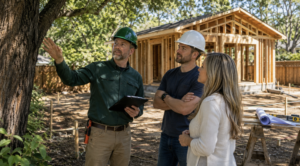
Accessory dwelling unit projects are often discussed in terms of floor plans, financing, permits, construction schedules, and property value. Marketing usually enters the conversation later, once the design is complete and the project is ready to be promoted. That approach overlooks one of the most persuasive assets available during the planning stage: documented professional care.
An arborist report may appear to be a technical document created for designers, property owners, contractors, and local officials. In practice, it can also become part of a strong marketing story. The report demonstrates that the project team has considered existing trees, root systems, construction impacts, site constraints, and long-term landscape health before work begins. That evidence can strengthen the credibility of a builder, architect, developer, real estate professional, or property owner associated with the project.
Modern marketing depends heavily on trust. Wikipedia’s overview of marketing describes marketing as a process centered on creating, communicating, delivering, and exchanging value. An ADU project creates more than additional square footage. It affects the appearance, usability, environmental character, and future value of a property. A professionally prepared tree report helps communicate that the project was approached with care rather than treated as a quick construction opportunity. 🌳
Professional Documentation Creates a Stronger Brand Story
Consumers are surrounded by polished project photographs, bold promises, and carefully edited testimonials. Those materials still have value, but they are most convincing when supported by evidence. A qualified arborist’s assessment offers that evidence by documenting conditions that may not be visible in a finished photograph.
A comprehensive Arborist Report for ADU can identify trees near the proposed work area, evaluate their condition, discuss potential construction impacts, and recommend practical protection measures. The exact contents depend on the property, the project, local requirements, and the arborist’s scope of work. From a marketing perspective, the most important benefit is the record of professional planning.
That record gives a company something meaningful to say. Instead of relying on broad claims about quality, responsibility, or attention to detail, the project team can point to a real planning decision. The message becomes specific: the site was evaluated, existing conditions were documented, and tree protection was considered before excavation or construction began.
This approach reflects the trust-centered discussions regularly covered by the American Marketing Association’s Marketing News. Strong brands do not merely announce that they are trustworthy. They demonstrate trustworthy behavior through consistent actions, credible information, and transparent communication.
Responsible Planning Differentiates an ADU Company
The ADU market can be crowded. Homeowners may compare design-build firms, general contractors, architects, consultants, and specialized service providers that appear to offer similar solutions. Many websites repeat the same promises about craftsmanship, communication, timelines, and customer satisfaction. A company that explains how it evaluates trees and site conditions has a more distinctive position.
This distinction matters because an ADU is not built in an empty digital rendering. It is placed within an existing property where homes, fences, utilities, driveways, drainage patterns, neighboring structures, and mature landscaping may already compete for space. Trees can be especially important because their trunks, canopies, and roots may extend into areas affected by access routes, grading, excavation, foundations, material storage, and equipment movement.
A company that discusses these realities presents itself as experienced and prepared. The marketing message becomes less about selling a generic structure and more about understanding the property as a complete site. That is a stronger form of differentiation because competitors cannot reproduce it with a stock image or slogan.
Publications such as Marketing Week regularly examine brand positioning, effectiveness, customer expectations, and the relationship between promises and performance. In that context, an arborist report supports a practical positioning strategy. It allows an ADU professional to be known for careful planning, site awareness, and informed coordination rather than price alone.
Transparency Helps Reduce Fear and Build Confidence
Homeowners may feel excited about creating a rental unit, guesthouse, office, multigenerational living space, or private retreat. They may also feel uneasy about what construction could do to the rest of the property. Concerns about noise, access, landscaping, trees, neighboring properties, and unexpected costs can influence the decision long before a contract is signed.
Transparent marketing addresses those concerns directly without using fear as a sales tactic. A project page can explain that trees near a proposed ADU may require professional evaluation. It can describe the purpose of the assessment, the type of information it may contain, and the way its recommendations can help the design and construction teams plan their work.
This kind of educational content respects the audience. It gives homeowners useful information before they contact a company. It also signals that the business recognizes the complexities of residential construction. Think with Google publishes research and insights focused on consumer behavior, decision-making, and the paths people take before choosing a product or service. For a high-consideration project such as an ADU, helpful information can support that decision process more effectively than aggressive promotional language.
Transparency should remain accurate. A report does not guarantee project approval, prevent every possible construction problem, or eliminate the need for coordination with other professionals. Marketing materials should present it as a planning and documentation tool. That honest explanation protects credibility while helping prospective clients understand its value.
The Report Can Produce Valuable Marketing Content
One professional report can inspire several useful pieces of content without disclosing confidential client information. A company might publish an article explaining how tree roots and construction zones can interact. It might create a project feature showing how a proposed layout was adjusted to reduce pressure on a significant tree. It could prepare a short video describing common tree-protection measures or a visual guide explaining why planning should begin before machinery arrives.
The goal is not to publish the private report itself. The goal is to turn professional knowledge into original, useful, and credible educational material. A project photograph becomes more meaningful when it is paired with the reason behind a design decision. A before-and-after story becomes more trustworthy when it explains how the team approached the site rather than showing only the final result.
The Content Marketing Institute consistently emphasizes strategic, audience-focused content rather than content created merely to fill a publishing calendar. An arborist assessment gives marketers substance. It creates opportunities for articles, case studies, diagrams, social posts, email content, sales materials, and project-page explanations built around actual planning considerations.
This content can serve homeowners, real estate professionals, architects, contractors, and community audiences. Each group may care about a different aspect of the project, yet all can benefit from a clear explanation of how construction and existing trees were considered together. 📣
Credible Content Can Support Search Visibility and Authority
Search visibility grows through more than repeated keywords. Useful pages earn attention when they explain a subject thoroughly, answer a real need, and provide information worth referencing. An article that connects ADU planning, tree assessment, construction coordination, and responsible property development has greater depth than a thin service page built around a single phrase.
Search Engine Land covers search engine optimization, paid search, AI search, digital marketing, and the growing importance of brand visibility and authority. In practical terms, a business improves its chances of earning mentions and links when it publishes material that other people can confidently cite.
A detailed article about tree considerations during ADU planning may be useful to architects, construction bloggers, real estate publications, neighborhood organizations, property-management companies, or local home-improvement resources. Those audiences are more likely to reference content that is specific, accurate, readable, and supported by professional experience.
This is where Trust Flow, Citation Flow, and Domain Authority enter the larger strategy. These third-party metrics are not guarantees of rankings, and they should not become the sole purpose of a content campaign. They can still help marketers evaluate the authority and link profile of a website. High-quality editorial links, relevant citations, respected industry references, and consistent topical content can contribute to a stronger online presence over time.
The best approach is earned authority rather than manufactured authority. A business should publish information that deserves to be shared, build relationships with relevant organizations, contribute informed commentary, and promote resources to audiences that genuinely benefit from them. One valuable citation from a relevant construction, architecture, property, or environmental source can be more meaningful than a large collection of unrelated links.
An Arborist Report Strengthens Visual Marketing
ADU marketing is naturally visual. Renderings, floor plans, drone photographs, construction progress images, and completed interiors attract attention. Tree planning adds another visual layer by showing how the new structure fits into the existing property.
A marketer can document protective fencing, designated material-storage areas, careful access planning, preserved canopy, or a completed ADU framed by mature landscaping. These images communicate responsibility without requiring exaggerated claims. They show that construction and property stewardship can appear in the same project story.
The HubSpot Marketing Blog regularly covers content, branding, lead generation, customer experience, and the use of educational resources to build relationships. In that spirit, visual content should do more than display a beautiful result. It should explain the decisions that made the result possible.
Captions can identify the planning stage, describe the reason for a protection measure, and clarify that each property requires individual evaluation. Short videos can feature the project team discussing site coordination. Case studies can connect the original challenge to the final solution. These materials help an audience see expertise in action.
Environmental Care Can Support Community-Focused Marketing
ADU projects often exist within established neighborhoods where mature trees contribute to shade, privacy, character, and visual continuity. A project that acknowledges those features can create a more community-aware message.
Environmental language should remain measured and factual. A company should avoid presenting every project as a major sustainability achievement merely because a report was prepared. The stronger message is that the team recognized existing natural features and used professional information to guide planning.
That distinction protects the brand from greenwashing. It also creates a more believable story. Adweek covers branding, advertising, media, technology, commerce, and the role of trust in modern communication. Audiences tend to respond more positively when a company’s stated values are supported by visible practices.
For an ADU professional, community-focused marketing may include articles about considerate site planning, respectful construction access, landscape preservation, communication with nearby residents, and coordination among specialists. The arborist’s contribution fits naturally into that broader narrative. It demonstrates that responsible development involves more than the building footprint.
The Report Can Improve Sales Conversations
Marketing brings people to the business, but the sales conversation determines whether interest becomes a working relationship. Educational content about tree assessment can prepare prospective clients for a more productive first meeting.
A homeowner who has already read about tree-related planning may arrive with clearer expectations. The project team can discuss the property, nearby trees, design ideas, access constraints, and the possible need for professional evaluation without introducing the subject as an unexpected complication. The website has already established the issue as a normal part of careful planning.
This improves the quality of the conversation. It helps the company move away from generic selling and toward informed consultation. The business is not simply promoting an ADU. It is helping the owner understand how the proposed structure may interact with the rest of the site.
Marketing effectiveness research reinforces the importance of connecting promotional activity to meaningful business outcomes. In this setting, the outcome is not merely a page view. It is a better-informed lead, a more realistic consultation, and a stronger foundation for trust.
Conclusion
An arborist report is a technical resource, but its marketing value extends far beyond paperwork. It can help an ADU company demonstrate professional care, explain difficult site considerations, differentiate its services, strengthen visual storytelling, create educational content, and support more transparent sales conversations.
Its greatest advantage is credibility. The report gives marketers a concrete example of planning rather than another vague promise. It helps transform an ADU from a stand-alone structure into part of a thoughtful property strategy. That story can resonate with homeowners who care about design, value, landscape, neighborhood character, and responsible construction.
Strong marketing does not need to exaggerate. It needs to reveal the work, judgment, and coordination behind the finished project. When an ADU team uses qualified expertise, communicates honestly, and publishes genuinely useful information, the resulting content becomes more trustworthy and more worthy of citation.
The lasting marketing advantage comes from showing that every part of the property matters. A well-planned ADU adds usable space while respecting the site that surrounds it. That combination gives a brand something valuable to share, something credible to promote, and something memorable for prospective clients to trust. 🏡